
Promotional products—pens, mugs, hats, tote bags—are everywhere. But have you ever wondered why they’re so effective at building brand awareness and loyalty? The answer lies in psychology.
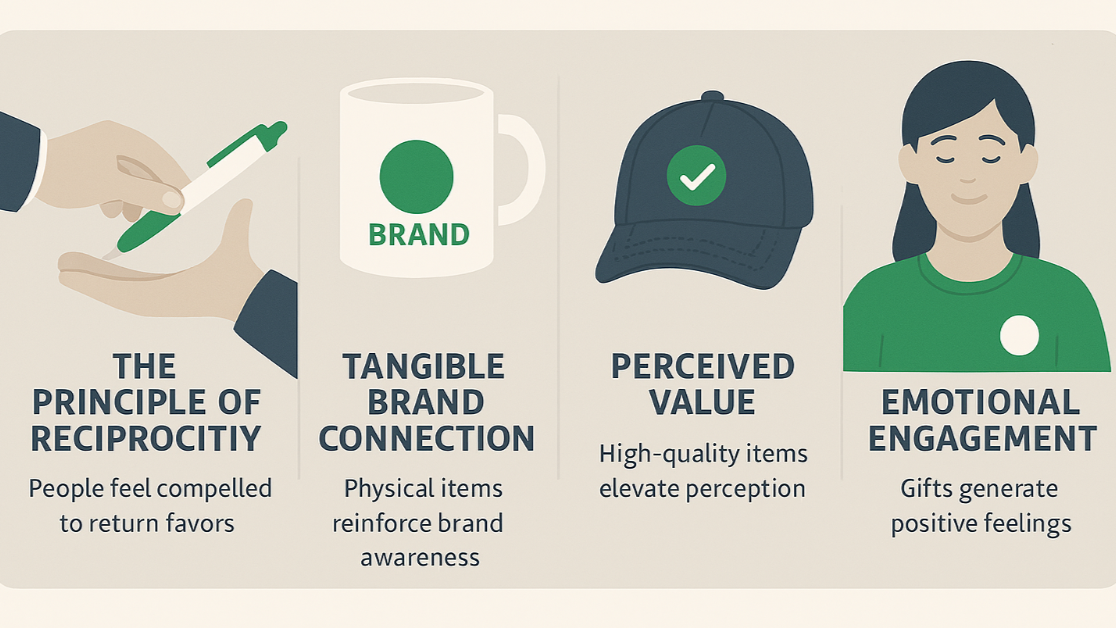
✅ 1. The Principle of Reciprocity
Humans are wired to return favors. When someone receives a free item, even something small like a pen, they feel a subtle obligation to reciprocate—often by engaging with your brand or becoming a customer. This simple act creates goodwill and strengthens relationships.
✅ 2. Tangible Brand Connection
Unlike digital ads that disappear in seconds, promotional products are physical. They sit on desks, travel in bags, and become part of daily routines. This repeated exposure reinforces your brand in a way that feels natural and non-intrusive.
✅ 3. Perceived Value
A well-designed promotional item feels like a gift, not an advertisement. High-quality products signal that your brand values its customers, which boosts trust and credibility. People associate the quality of the item with the quality of your business.
✅ 4. Emotional Engagement
Promotional items often evoke positive emotions—surprise, appreciation, even delight. These emotions create memorable experiences, and customers are more likely to remember and recommend brands that make them feel good.
✅ 5. Longevity and Impressions
A single promotional item can generate hundreds of impressions over its lifespan. A branded mug might be seen daily for years, making it one of the most cost-effective marketing tools available.
How to Choose the Right Promotional Products
Selecting the right items is just as important as giving them away. Here’s what to consider:
- Know Your Audience Choose products your customers will actually use. A tech company might opt for branded chargers, while a coffee shop could go with mugs or tumblers.
- Prioritize Quality Cheap items can harm your brand image. Invest in durable, well-made products that reflect your standards.
- Keep Branding Subtle Avoid overwhelming designs. A clean logo and brand colors are enough to make an impression without looking cluttered.
- Match Your Brand Personality Fun and creative brands can experiment with bold colors and unique items, while professional brands should stick to classic, polished designs.
- Think Longevity Items with everyday utility—like pens, notebooks, or drinkware—offer more impressions over time than novelty items.
Bottom Line
Promotional products work because they tap into fundamental human behaviors—reciprocity, emotional connection, and the power of physical presence. When chosen thoughtfully, they don’t just promote your brand; they create lasting relationships.

SUBMIT YOUR COMMENT